What it is
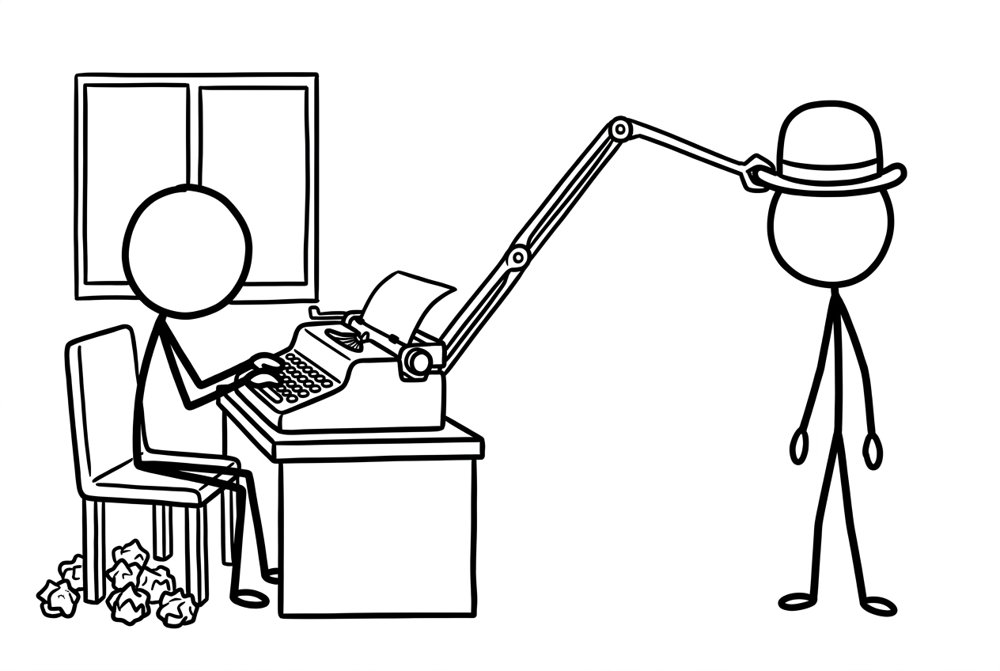
One player, the author, sits at a mimed typewriter and writes a story, and the other players act it out. The author can stop and delete a line, a character or the whole scene.
How to play
- Announcing the format. Tell the audience the format is called Typewriter and ask them for a title for the story.
- The author types. The author sits at the mimed typewriter and starts the scene, reading aloud what they type.
- The players come in. As soon as the author has given a few details, the players step on stage and start playing. When the author describes a character, a player takes on that role at once. And when the author describes the setting, the players can mime wind and rain.
- Over to the players. The author can tell the whole story alone or hand it over to the players. Then the author describes a character and the setting and makes it clear that the player in that role now makes up the lines.
- The author comes back. At any moment the author can take over again: switch to another place, bring in new characters, add a twist or a flashback. The author’s narration and the players’ scenes take turns.
Tips for players
Examples
Example 1 / 3
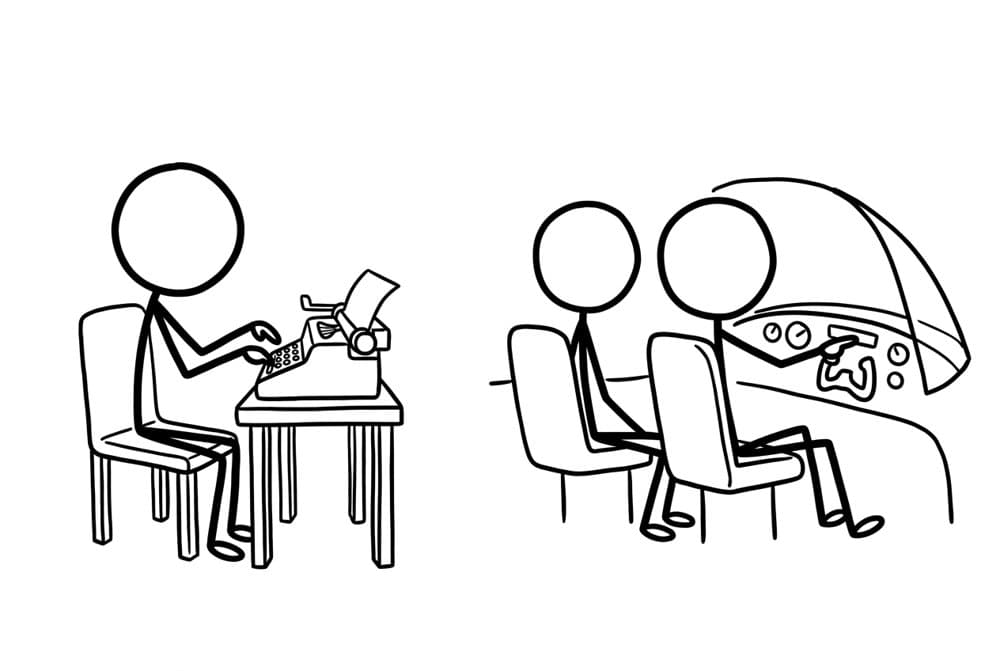
The author starts the story.
— Title: “The Grumpy Pilot and the Donkey”. Chapter 1. It was a gloomy day in Pennsylvania, and pilot Abigail Larsen was preparing for take off.
Player A plays the pilot Abigail, Player B the co-pilot: they prepare for take off.
Example 2 / 3
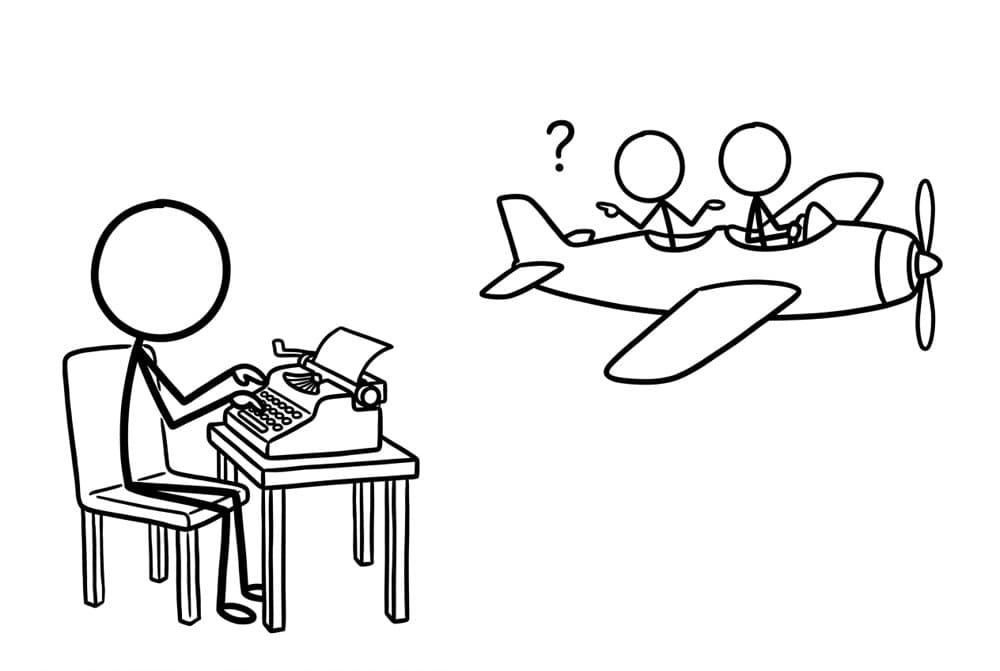
The author comes back to the story.
— Little did she know that this flight would be like none other. She pressed all the buttons she needed to press, and took off. Suddenly, they both heard a noise.
— How was Abigail to know it would be the start of a beautiful friendship?
Example 3 / 3
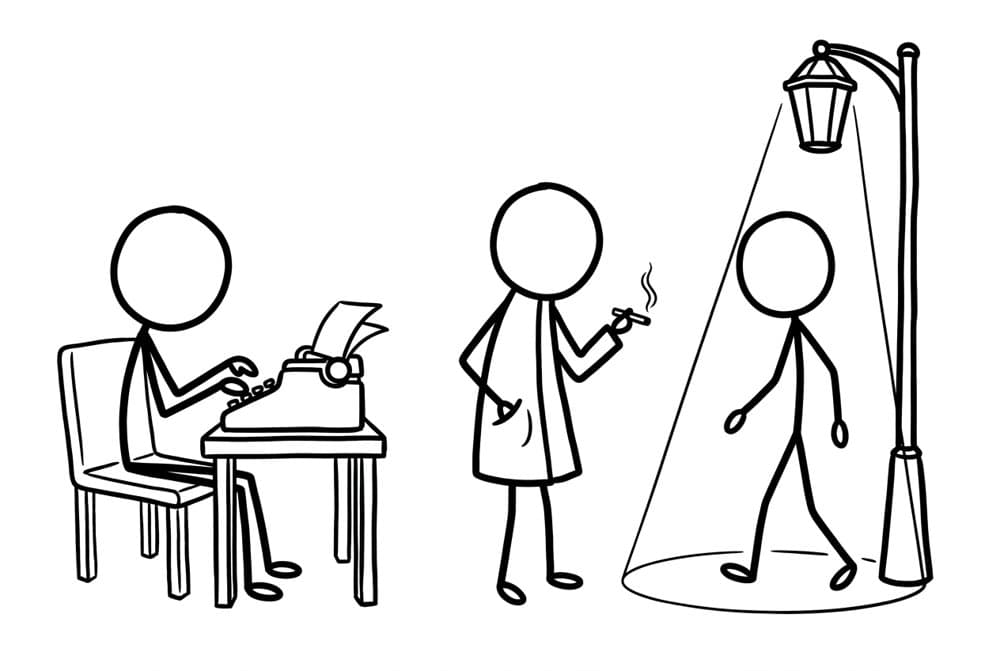
Player A, the author, sits to the side of the stage and types a gritty crime novel, “When It Rains”.
The author mentions an old man with a cigarette, and Player B steps in as him at once.
— I know you’re out there.
Player C steps into the light.
— You shouldn’t be surprised. I warned you this would happen.
The author types that the old man reaches into his pocket, and Player C asks:
— Is all the money there?
Variations
 Rotating TypistThe author’s role passes from player to player.
 Double TypewriterTwo authors sit side by side and write the whole story together. It’s a gentler way to get to know the format.
 Gibberish TypewriterThe characters speak only , an invented language, and the author speaks their native tongue. The players play with extra attack and confidence, so that empty “whawhawhas” don’t take over the scene.
 Blind TypewriterThe author sits offstage and can neither see nor hear the players. Usually they speak into a microphone, so the audience and the players can hear them. And the players work overtime to justify every mismatch between the author’s story and the scene.
 GimmicksThe author’s typewriter breaks down. Or the characters argue out loud against what the author intends.
Videos
Sources
Also called: Word Processor