What it is
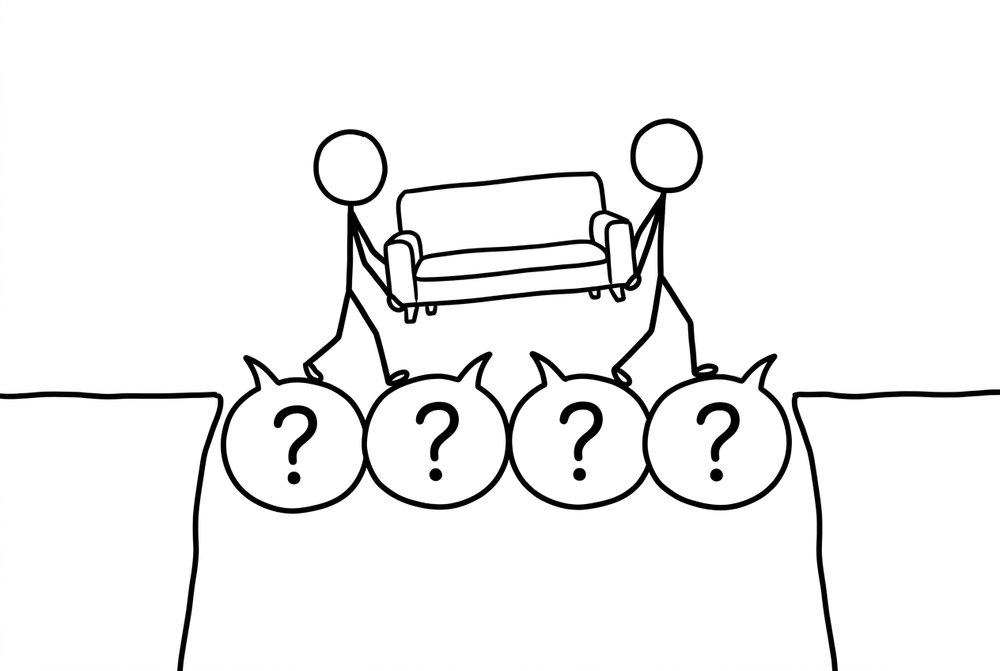
Players speak only in questions, but play the scene like a normal one. Questions Only is a format and an exercise. Answer fast and keep the scene moving forward.
In improv, questions are usually a bad idea: they put the burden of invention on your partner and add no information. But this format is a safe place to fail fast. Learn to play it well and you will play other formats better, and you will start to see what really matters in an improvised scene. Audiences value this format more for its difficulty than for its stories.
How to play
- The introduction. Name the format, the rule, and what happens after a statement or a stumble, in that order. Ask the audience for a location.
- Where to stand. The players form two lines and step forward for scenes in pairs. By tradition the scene is a two-person exchange until someone is out.
- Questions only. The players talk as in a normal conversation, but every line is a question. A statement with an upward inflection, or with “don’t you?” or “isn’t it?” on the end, is not a question. If a player says two sentences in a row, both must be questions.
- Mistake and swap. If a player stumbles, hesitates or makes a statement, they go to the back of the line and another player takes over. The host also calls out a long silence: the player is out, especially if the scene is fizzling.
- The host and the audience. The host announces each mistake clearly. And the audience can help: on a cue they groan or make a game-show buzzer sound. Get the audience to boo mistakes, to raise the pressure.
Tips for players
Examples
Example 1 / 3
The scene is an airport, with players A, B and C.
— Have you got your boarding pass?
— Barbados!
Player A goes to the back of the line.
— How many suitcases am I allowed?
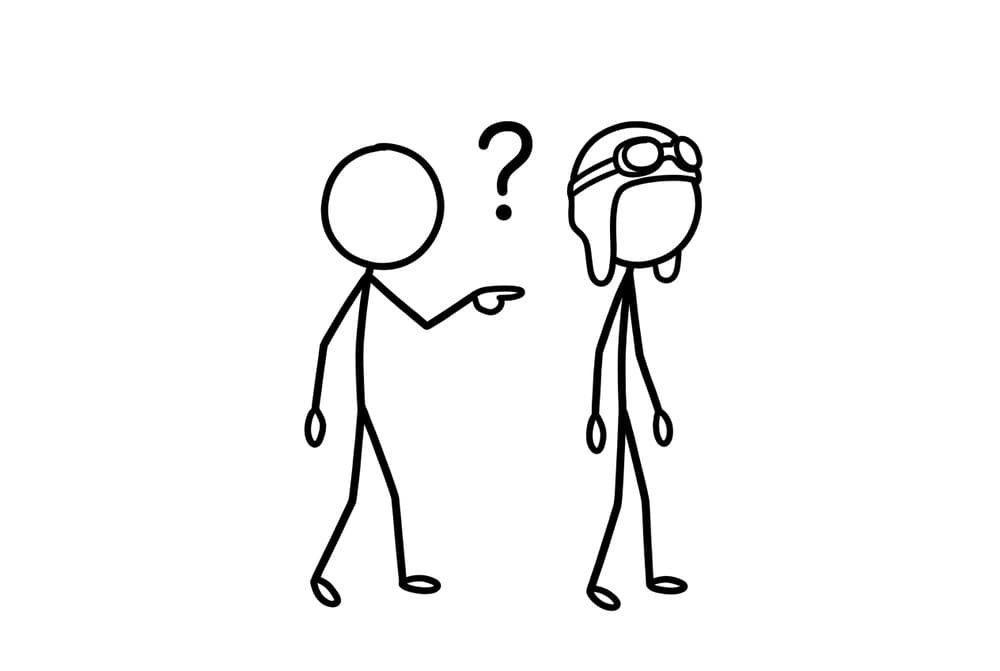
— Aren’t you the pilot?
— Oh yeah…
Player B leaves.

Example 2 / 3
The scene is a kindergarten, where players A and C start as an overwhelmed teacher and an overstimulated child.
— Weeraya, can you please put the chalk away?
— What are you going to do if I don’t?!
— Do I have to count to three…?
— Can you?
— I don’t get paid enough for this!
That’s a statement, not a question: the audience reacts, and the host names who slipped:
— Teacher!
Player A leaves the scene as the flustered teacher.

Example 3 / 3
The scene is a flower shop, with players Joe and Sital.
— Would you like some roses?
— Do I look like the kind of person who buys roses?
Sital answers silently: yes, I would.
— How much are they?
— Didn’t you read about our special offer?
— You want my whole stock?
Variations
One long scene
How it runs: With eliminations and entrances
What you get: A cohesive story
Separate scenes
How it runs: A new suggestion each time
What you get: A fast pace and variety
| One long scene | Separate scenes | |
|---|---|---|
| How it runs | With eliminations and entrances | A new suggestion each time |
| What you get | A cohesive story | A fast pace and variety |
Videos
Sources
Also called: The Question Game · With Only Questions, Scene · Frageszene