What it is
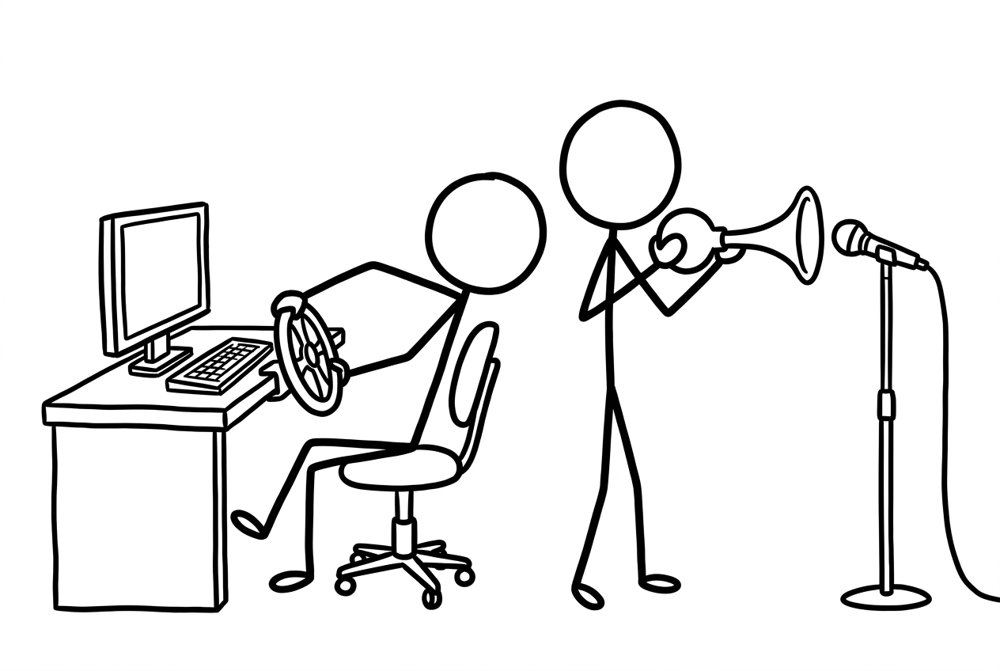
Two players act a scene and weave into it every sound that two sound improvisers make into a microphone offstage.
How to play
- The lineup. Split the players: some act the scene, others make sounds for them into a microphone offstage.
- Mic or voice. Use mics if you have them. If you have no mics, project the sounds with your voice straight into the scene.
- Which sounds. The sound improvisers make typical sounds: doors creaking and slamming, footsteps, running water, cars revving, animals barking and howling. Also chalk screeching on a blackboard, bones cracking, metal vibrating, things inflating and deflating, fists smashing, yawns, sneezes. And emotional ones: panting, gulping, sighing, weeping and laughing.
- Every sound into the scene. Accept any sound and let it alter the scene. Weave every sound into the action and justify it by what is happening right now.
- The story. Play all the narrative beats, as in a normal scene.
What it teaches
In this format everyone learns to listen: the players on stage have to hear both their partners and the sounds, and the sound improvisers have to pay attention to the stage.
The players also practise justifying mistakes and : the format works best when they react to the sounds and weave them into the scene. And they practise . The format is useful in too: supporting sounds often pop up there.
Tips for players
Example
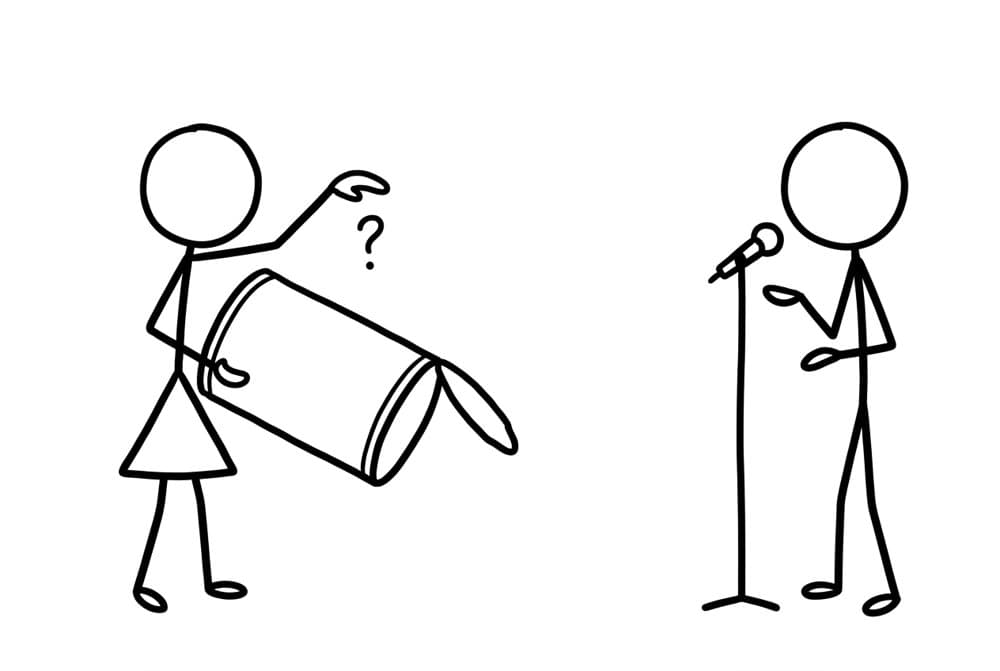
Jasmine mimes feeding a beast; the sound improviser voices each move.
Opens a door: creak. Shuts it: slam. To the shelf: footsteps. Takes down a huge tin: scrape.
Opens it: wrenching metal, a huge hungry beast whining.
Pours it out: slurping. Pats the beast: patting.
— Did you have fun today, darling?
— Yes, I chased the postman! — a huge voice booms.
Variations
 Audience ParticipationGive an audience member the microphone, and make sure they have fun and look good on stage.
 Sound Effects AudienceThe whole audience voices the scene: opening doors, breaking glass, gunshots, toilet flushes. The players play an open scene but give their mime objects and surroundings extra time, so the audience can add a sound.
 Sound Effects StoryThe audience suggests the story’s elements and makes the sounds. One character usually narrates in the first person: “Then it began to rain…”, “I slammed the door…”. A stock plot like a detective story works best.
 To a recordingThe players act a scene to a tape on which a random sound plays every thirty seconds or so. And if you have a sound improviser, they can make the sounds live.
 One sound improviserOne player, sometimes two, acts the scene, and one player offstage makes the sounds for it. They can also dub the players’ lines, though that is unusual. This format led to scenes with improvisers and jazz musicians.
Videos
Sources
- Hoopla Impro, London: the Sound Effects page
- learnimprov.com, Hugh MacLeod: the Sound Effects Audience and Booth Hell pages
- Sound Scape (Impro for Storytellers, Keith Johnstone, Faber and Faber 1999, pp. 207–209)
- ImprovDr, David Charles, “Game Library: Audience Sound Effects”
- fuzzyco.com: the Crazy Monkeys games list, the Sounds Effects Story and Paired Sound Effects entries
- Sound Effects (The Improv Handbook, Salinsky & Frances-White)
- Sound Effects Scene (The Playbook: Improv Games for Performers, William Hall)