What it is
Two players act a scene on an audience suggestion. At any moment the host, from outside the scene, or a partner can call out “New choice”.
How to play
- The lineup. Put two players on stage. The host stays out of the scene and runs it from the outside.
- The suggestion. Ask the audience for a suggestion to inspire the first scene, such as an occupation, a location or a word. You can also start from nothing, with no suggestion. Don't take too long to set it up: the format is easier to demonstrate than describe, and it generates its own content.
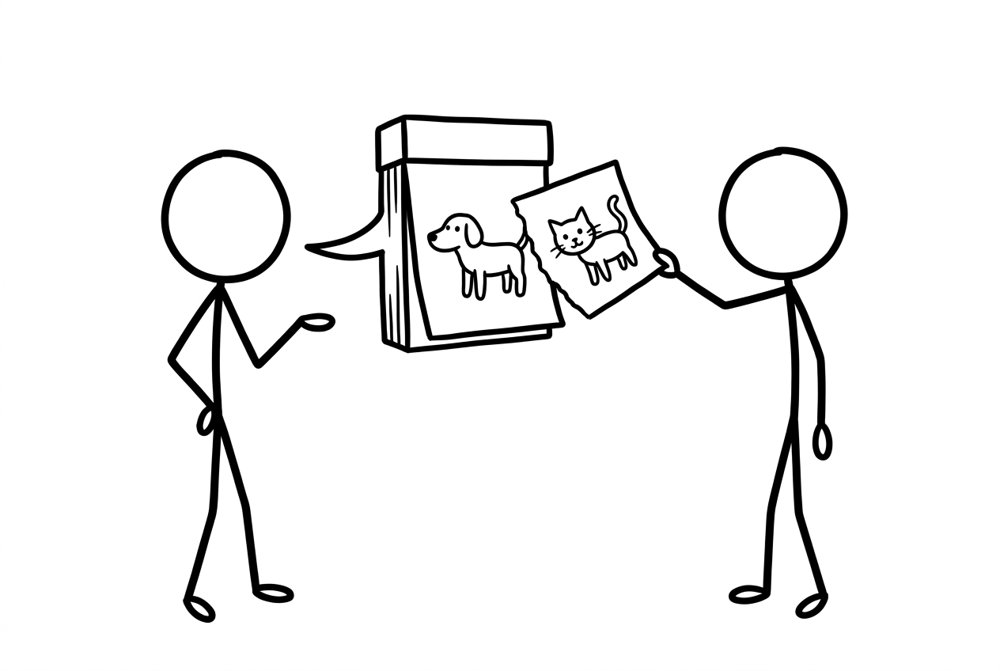
- The call. At any point in the scene, call “New choice”, out loud or with a whistle. The player who last spoke or acted replaces what they said or did with something else.
- The cut line. Treat the old line or action as cut: it makes no further impact on the scene. Play on from the new line.
- A series. Call “New choice” as many or as few times as you like, even several times in a row. Stop when you hear a line you like.
- Keep it short. Don't drag the scene out: the format depends partly on the novelty of its procedure.
What it teaches
Here players learn to say the first thing that comes to them, and to adapt when the scene changes. They also learn to incorporate their mistakes.
There is probably never one right choice in a scene, but many good ones. A bold choice, unobvious, strange or even stupid, can probably be justified later in the scene. A weak, vague or empty one doesn't even give you that chance. This format can show players that their imagination is a well that never runs dry.
The format is hard: it puts huge pressure on players and forces them to be creative, fast and confident.
In class the format teaches players not to block a partner's ideas: as soon as a player blocks, call “New choice” and keep going until you hear a strong . And when players get bogged down trying to find the “right” , this format is an excellent one to bring in.
Tips for players
Example
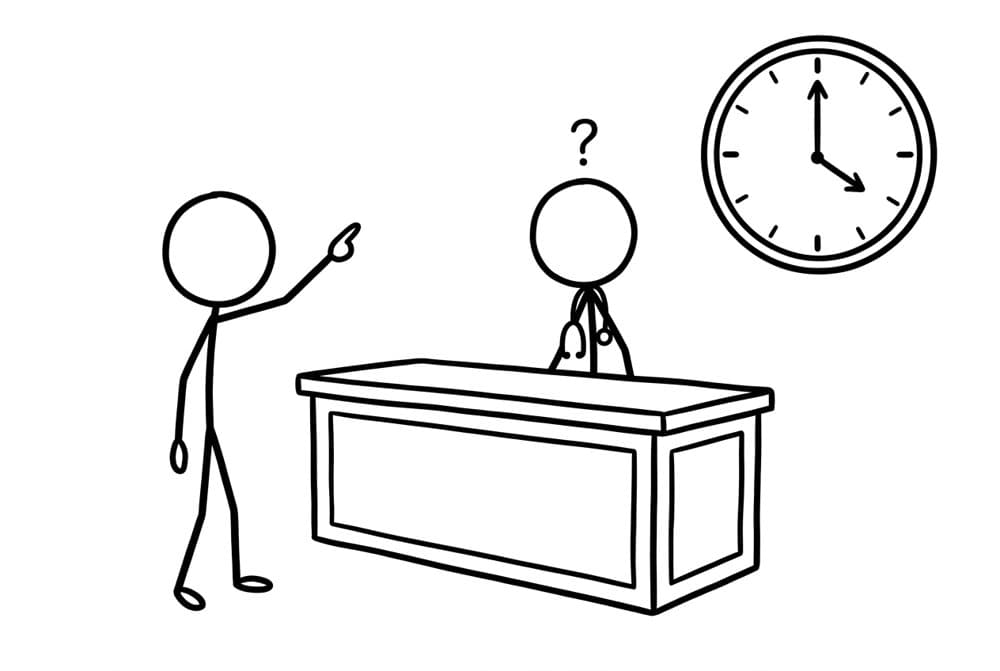
A visitor comes to the vet.
— It's about my cat.
— New choice!
— It's about my dog.
— New choice!
— It's about four o'clock.
— New choice!
— Got any animals you don't need?
Variations
 New ActionBesides “New choice”, the host can call “New action”: then the player changes not only the words but also what they are doing.
 BellRing a bell instead of calling “New choice”. You can give the bell to an audience member, but then you can no longer shout “New noise!”, “New facial expression!” or “New dance!”.
 HornsGive horns to three audience members in the front row: they honk whenever they want, and the player changes their last line. This version is called Honkasaurus Rex, and it is basically the same format.
 The Whole AudienceAs the finale of a show, the whole audience calls “New choice”. Then leave especially clear pauses, so the audience can shout. An audience rarely changes the same line more than once or twice.
 Each OtherSometimes the players call “New choice” on each other, simply when they don't like what a partner offered.
 CrescendoAs the scene goes on, more players can come in as walk-ons. And the host calls “New choice” more and more often, which gives the scene a crescendo of an ending.
Videos
Sources
Also called: Sure Ding · Change · Shouldasaid