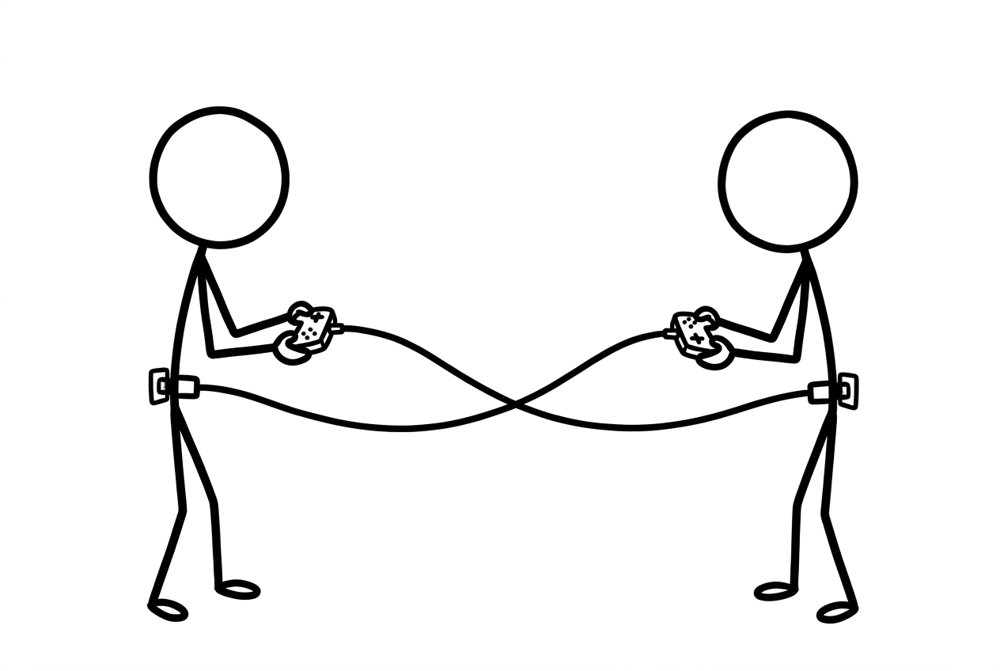
What it is
Two players are on stage: each speaks for their own character, and their partner describes that character's actions.
How to play
- The first line. One player opens the scene with a line from their character: “I'm home!”
- The direction. As soon as they finish the line, the other player speaks about them in the third person, “He said…” or “She said…”, and names an action: “He said, throwing his satchel on to the table.” Then the second player says their own line: “How was school?” “They said” works too, or an -ing verb straight away: “They said climbing…”
- The action. Until the direction is spoken, the player freezes in position. Then they perform the action exactly as described, even if it's strange, exaggerated or surprising. Meanwhile their partner continues the dialogue.
- Back and forth. From then on the players alternate lines and directions, and each new action is provided by the other player.
- The ending. Play until a good story comes together. The scene can close when it reaches a natural or satisfying stopping point: emotionally, comedically or narratively.
What it teaches
The game may sound coercive, but your partner can't really control you against your will. At first players defend themselves by forgetting the rules, and then they find a subtler defence: they keep away from their partner. Being controlled from a distance feels safer, and so they keep interaction to a minimum.
Adults find this game difficult, and that arouses their curiosity. And because it's difficult, they have less need to punish themselves when they fail. At first adults often find it baffling, and the rhythm of switching between lines and directions can take a while to come. It takes about forty minutes to master.
Tips for players
Example
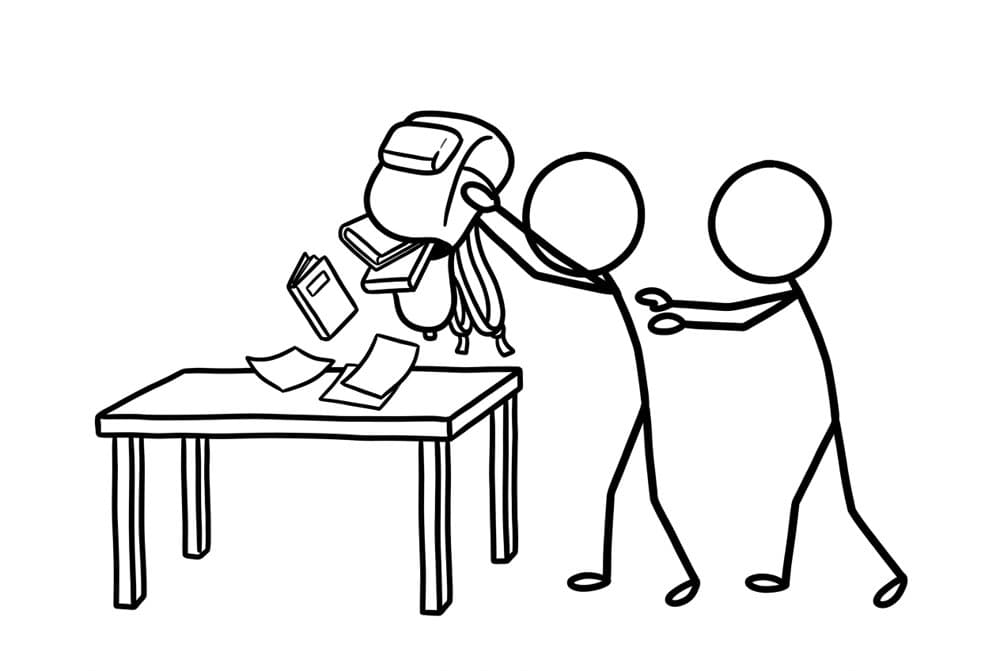
— I'm home!
— He said, throwing his satchel on the table. How was school?
— She said, looking inside it. Mum! That's mine!
— He said, failing to snatch it. I just want to see your homework.
— She said, tipping it out. I did it at school, Mum.
— He said, smiling falsely, backing to the door. You've skipped school for a month!
Variations
 Offstage directionsFour players: two onstage speak the lines, two offstage direct. A third character's directions come from another player or one of those two. Splitting the jobs can help players who struggle to speak and move at once.
 PimpingSetting each other up with the directions can get laughs, but a story is unlikely to emerge.
 Separate jobsOne player speaks for both, as in dubbing, and the other provides the actions for both.
 GibberishThe players speak their lines in but give the directions in English.
 Audience volunteerThe players give directions not only to each other but also to a volunteer from the audience.
 AdjectivesInstead of directions, the players call out adjectives: “Sorry I'm late” is followed by “Suspicion.”