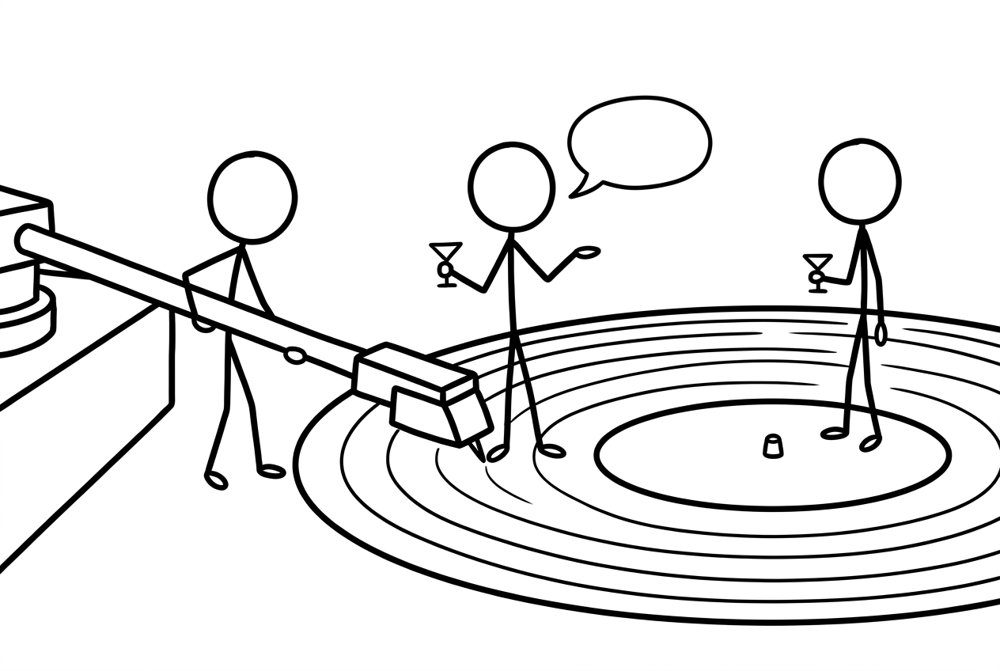
What it is
Players in pairs or groups of two or three spread out across the stage as different corners of one cocktail party, and the group whose number the host calls out speaks.
How to play
- Setting up. Split the players into pairs or groups of two or three. Tell the pairs they are couples at a cocktail party. Scatter the pairs around the stage, with some space between them.
- Topics. Give all the groups the same suggestion, so that it inspires different conversations.
- Numbers and the host. Give each group a number. An outside director or a conductor from among the players calls out the numbers.
- Focus by number. The host calls a number, and that group takes focus. The others listen to it while behaving as if they are still talking with their partners. When a new number is called, the previous group stops talking and gives focus, and the new one starts or resumes its conversation.
- Dropping the host. After a few rounds the host stops calling numbers. And the players pass focus by themselves.
What it teaches
In this format players learn to give and take focus in group scenes. And they discover levels of meaning and connections within their scenes.
A lot of players on stage is no problem, as long as everyone knows where the focus is. Players usually pass focus around the stage like a volleyball.
Once the numbers stop, a natural rhythm soon develops: the players sense when the speaker is ready to pass focus, and they pass it more and more rapidly. The conversations progress and heighten, while each piece of them gets shorter and shorter.
At first the pairs talk about topics as different from each other as possible. The result is chaos, and it is necessary: the group mind can use it in interesting ways. Each player hears everything said on stage, so the group mind can take over.
No matter how different the topics are at the beginning, they always connect by the end, usually in the most unexpected ways. The topics are like the poles of a teepee: the higher they go, the closer together they get. This principle is often used in a Harold too: the farther apart the scenes or topics, the more amazing it is when they finally connect. Cocktail Party can be played as the opening of a Harold.
Tips for players
Examples
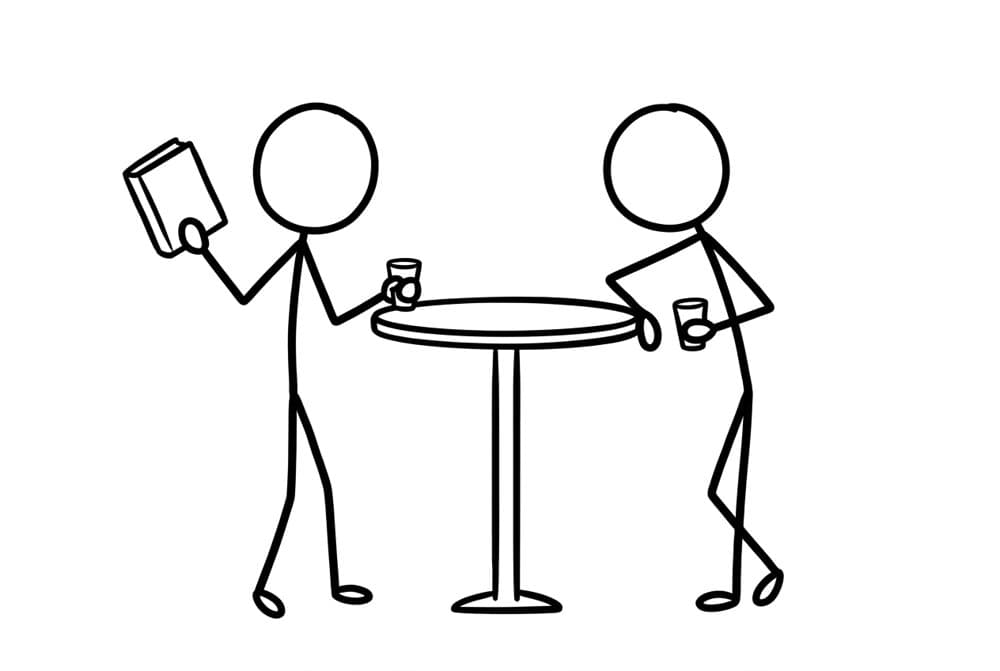
Example 1 / 3
Four pairs of players are spread across the stage, each with its own topic.
— I’m a teacher, and this book banning hits my job directly.
— So it’s affected you too?
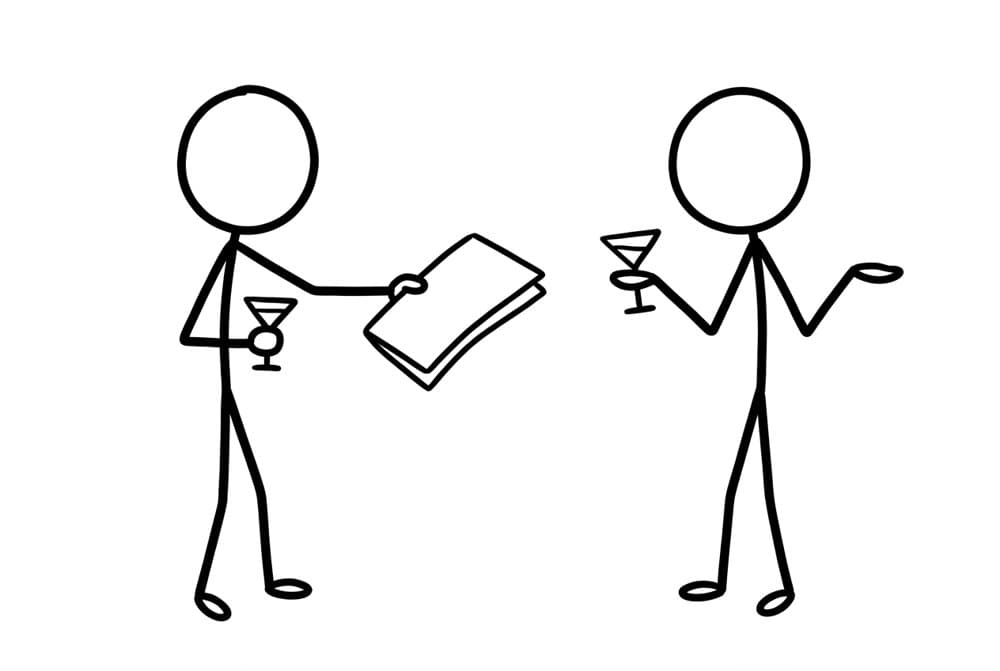
Example 2 / 3
Focus passes to the second pair.
— Are you following the Russian republics’ dealings with the U.S. president?
— I am, but I don’t understand any of it.
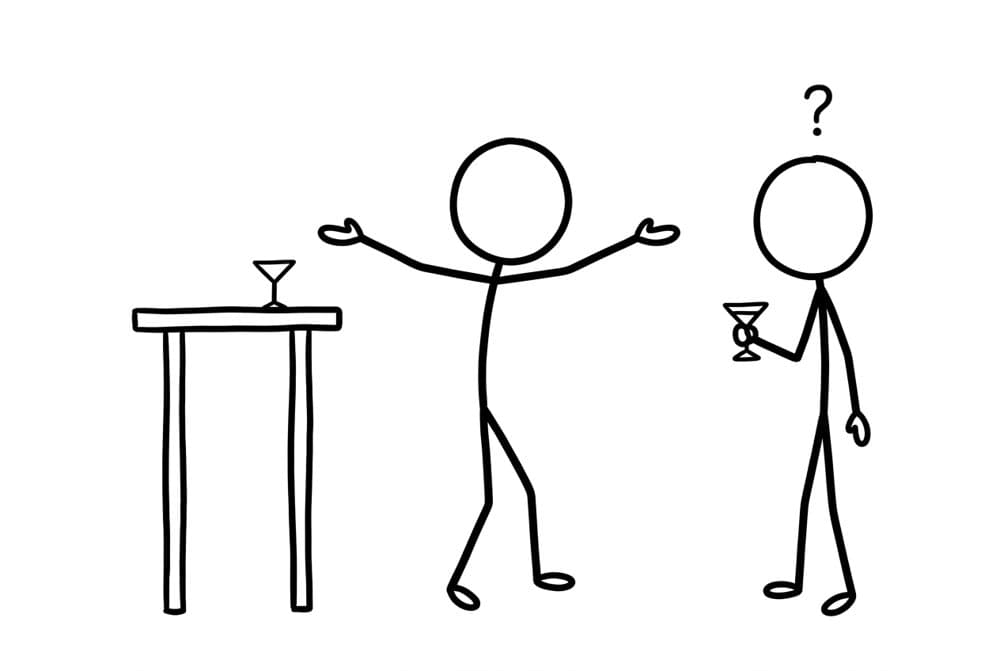
Example 3 / 3
The third pair has focus.
— Have they rescued the whales trapped in the Arctic ice yet?
— They’re still trying.
The fourth pair talks about mass murderers.
Variations
 Three groupsIn the UCB manual there are exactly three groups of two or three players on stage.
 With connectionsNew players practise listening again: each group listens closely to the one speaking. Retaking focus, a group tries to weave in details, ideas and themes it heard from the others. This skill often helps in .
 RestaurantSix players sit in pairs, as if at different restaurant tables. Ask them to make nothing up and talk for real, as themselves. To take focus, a pair repeats another pair’s line and fits it to its own topic.