What it is
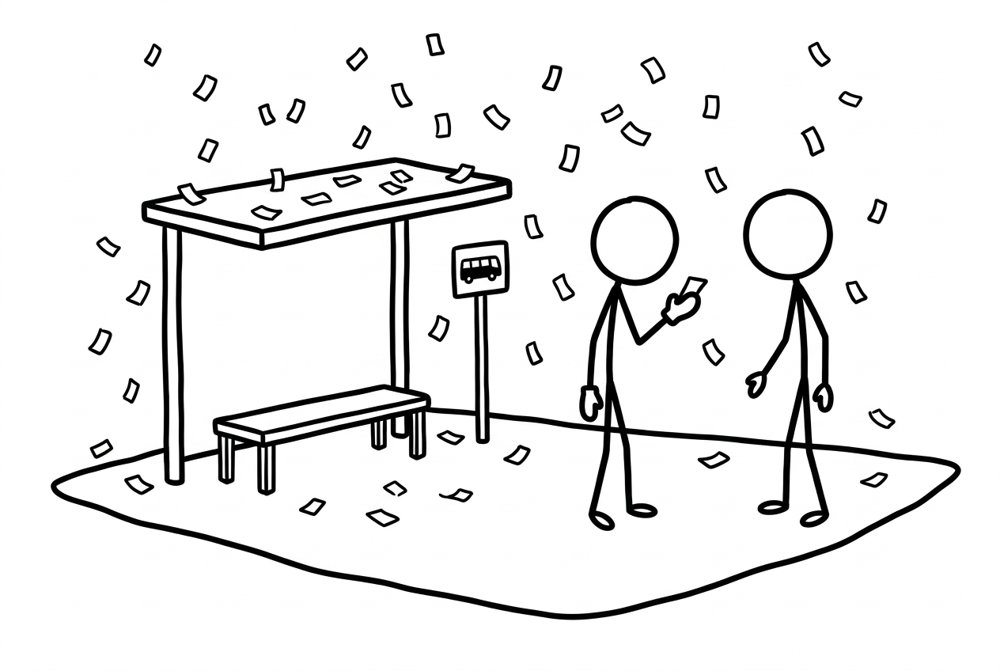
The players act out a scene with slips of paper on which the audience has written lines: every so often a player takes one, reads it and justifies it. It is a game built on scenic justification.
How to play
- Collecting the lines. Before the show or during a break, ask the audience to write lines on slips of paper, and give them some direction about what kind. Stopping the show to collect them is not recommended. In one version the players leave the room while this happens.
- What lines. Ask for famous quotes, advice, sayings, clichés, lines from songs and movies, things they overheard. And also something their grandparents always say, a lie they've told, a pick-up line, the typical words of a crucial moment.
- How many. Collect about fifteen lines and put them in one container, a hat, a bucket or a box in plain sight of the audience. With too few lines, you run out long before the scene ends. Too many is a waste of time, and audience members are disappointed if there is no room for their line.
- Handing out the slips. Before the scene, two players take a few slips each into their pockets, or they draw them during the game from the shared hat or bucket. Other players may enter the scene later, and they take slips too. Spare slips can be used in the games that follow.
- The suggestion. Get a suggestion from the audience, a location, a relationship or a conflict, and start the scene.
- Reading. Every so often, take out a slip and read the line aloud. Work it into the scene and justify it as if it were exactly what your character wanted to say.
Tips for players
Fit the line into the story that is already running: that is stronger than adding something new to the scene. You can also justify the fact that you are taking out or picking up a slip.
You can set up who, where, what and why first, and only then take a slip. And only take one when you need it.
Don't look at the slip in advance: a cold reading is better. And justify the line after you read it, not before.
Space your readings unevenly, not too often and not too rarely. If you fire off unconnected lines and leave no room to justify them, the story will probably die.
Once you have read a line, crumple the slip and casually toss it off the stage, so it isn't read twice. But don't make a show of throwing it into the audience: that distracts from the scene.
If you are the reader in the phone version, your words are limited, so make strong offers with staging, emotion and subtext. Give the reader ten to twenty seconds to scan the text thread.
If you are the reader's partner, give them focus on purpose and lead them into a line. Don't get carried away with narrow questions: too many of them weigh the scene down.
An introducing sentence before the reading helps, usually one that ends with a colon. But don't announce the line in advance, out of context: then it won't surprise or shake up the scene.
Example
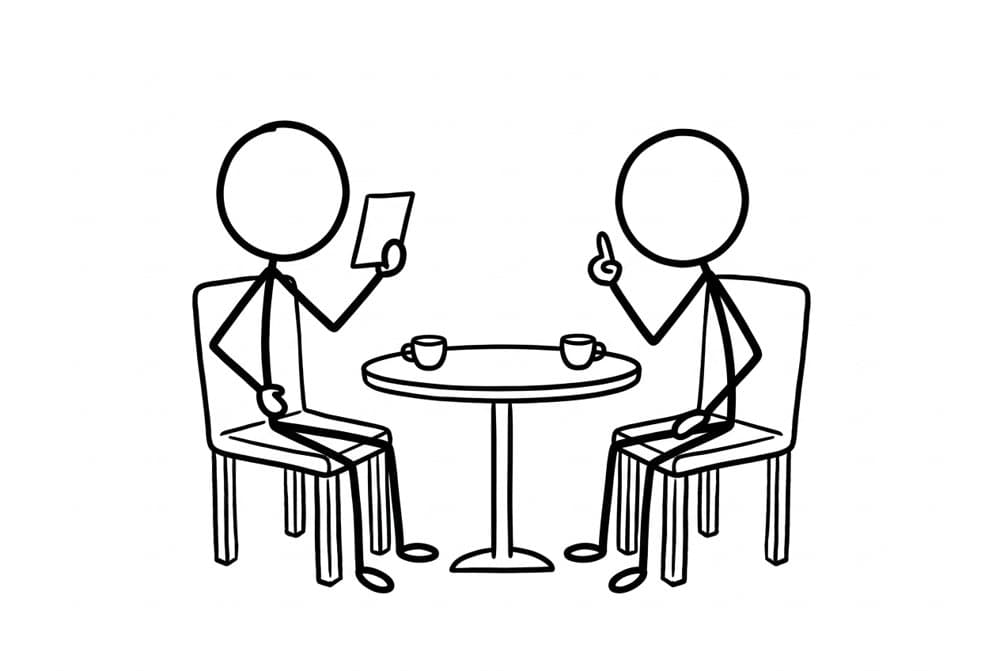
Two players are arguing in a café; each has a few slips from the audience in their pocket.
— You forgot our anniversary again!
— That's not true, I was planning a surprise.
Player A takes a slip out of a pocket and reads it without a pause: — “My slippers ran away to Siberia.”
Player B justifies the line at once:
— See, you can't even keep hold of your slippers, and you promised to take me to the seaside!
Variations
When to read When to readThe players pick up slips only when the host claps. Or the first line of each scene is always read from a slip. Or the players clap themselves and start a new scene, as in Freeze Tag, where a player shouts “Freeze!” and starts a new scene from the pose of a player in the old one.
With a phone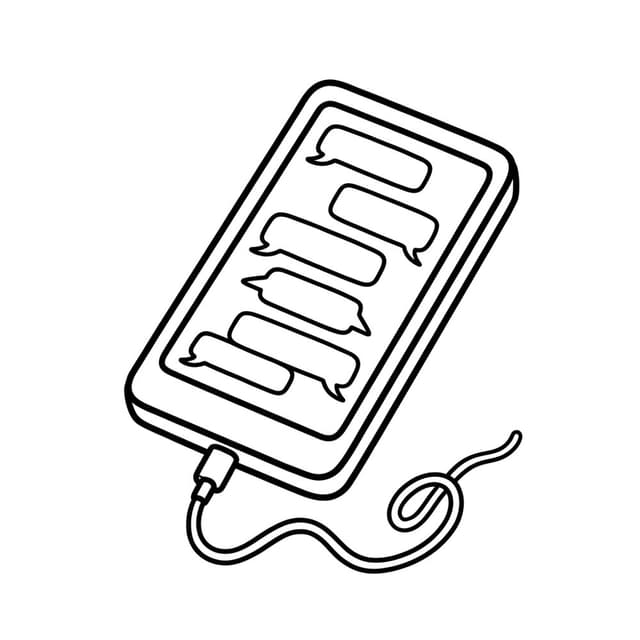 With a phoneAn audience member hands an unlocked phone with a text thread open to a player chosen in advance. That player speaks only in lines from the thread, and the partners work them in and justify them. The scene usually starts with two players, without the reader. The reader takes the first line that roughly fits: if they scroll for long, the scene loses steam.
Musical version Musical versionEach slip holds the title of a song, or the players sing the lines as lyrics.
Slips on the floor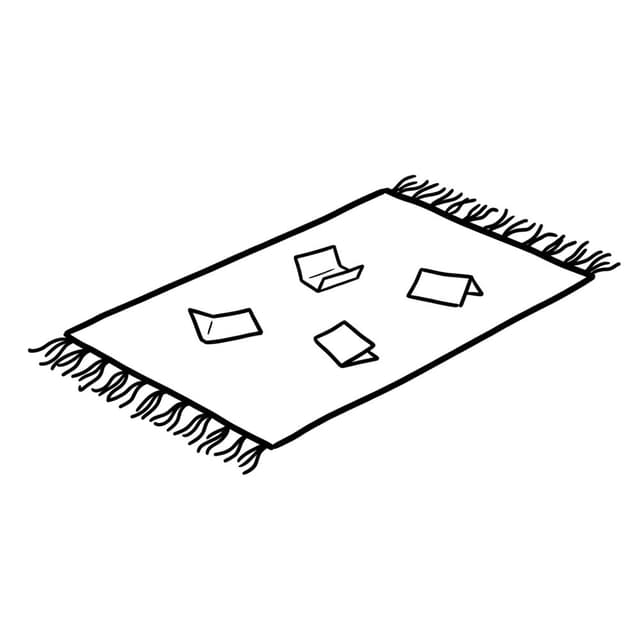 Slips on the floorInstead of pockets and a hat, the slips are scattered on the floor before the scene, so no one can read a line without picking it up. A player bends down, picks up a slip and justifies both the line and why they bent down.
Unusual slips Unusual slipsA slip can be blank, in another language, a picture, a very long text or a description of a physical action.