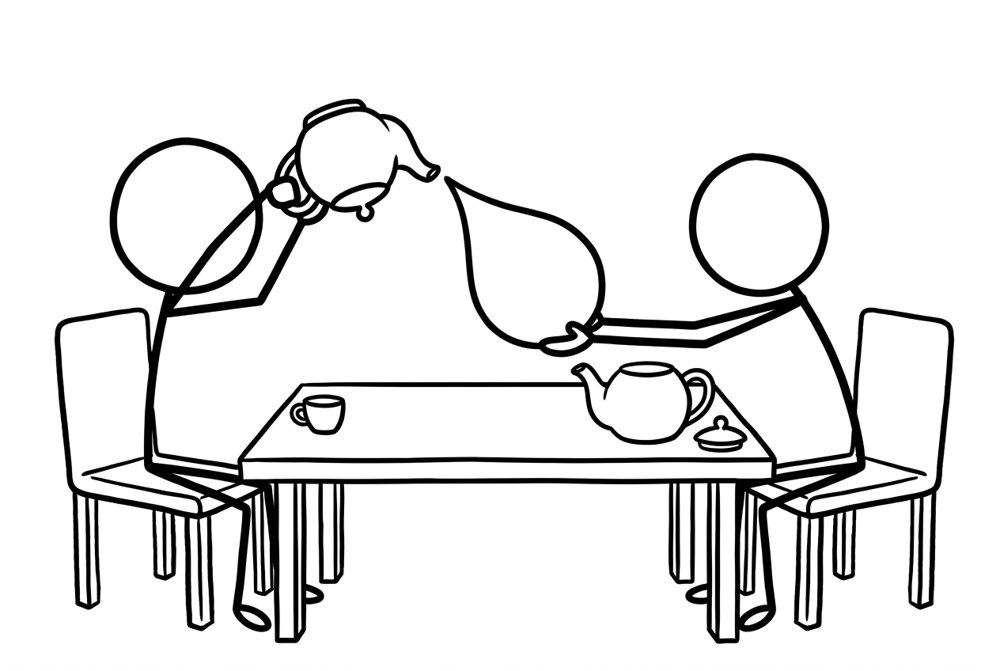
What it is
Players talk, and each one begins their line with the partner’s last word. You can play this format as a performance game, a teaching activity or a debrief technique.
How to play
- Pairs. Split the players into pairs or small groups.
- Last word. Have one player begin talking based on the prompt. From then on, begin each line with your partner’s last word.
- Missed word. In a performance, a player who misses the last word sometimes has to make an excuse to leave the stage.
What it teaches
In class, players can see how hard it is to listen to the very end of the person who is speaking. A player can make their own offer only by first using their partner’s word. And players scrutinize their lines more closely.
A debrief played this way can slow down and get surprisingly rich. And William Hall writes that he often plays it in business meetings to keep himself on his toes.
Tips for players
Examples
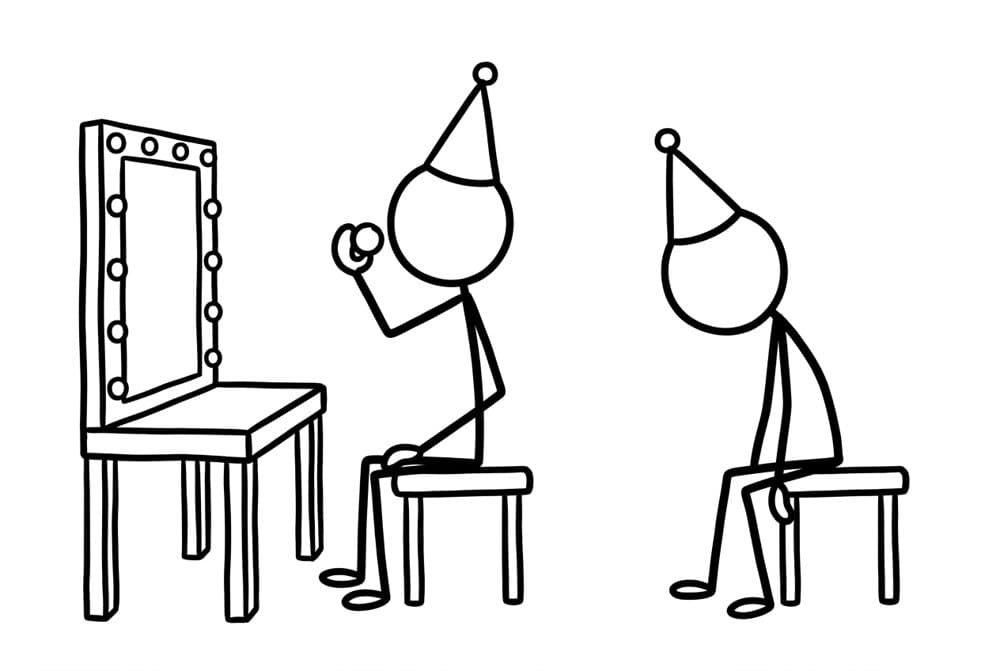
Example 1 / 3
Players A and B are clowns backstage after a show.
— That was a difficult show.
Player A takes off their clown nose.
— Show me one good reason to come back tomorrow.
— Tomorrow is another day, with a different audience.
— Audiences, Twinkles, just aren’t the same anymore.
— More and more, yes. Kids would rather just be sitting in front of their screens…
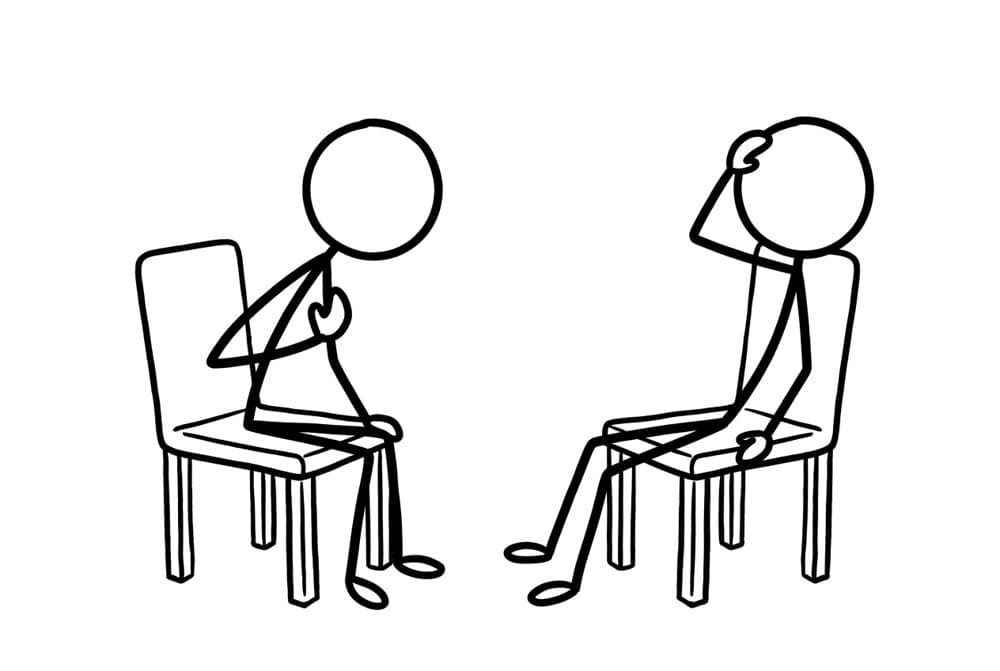
Example 2 / 3
Players A and B are talking.
— I noticed how much I wanted to say something good.
— Good answers can often pull us out of the moment. I felt the same thing, it was frustrating.
— Frustrating, yes, and effortful.
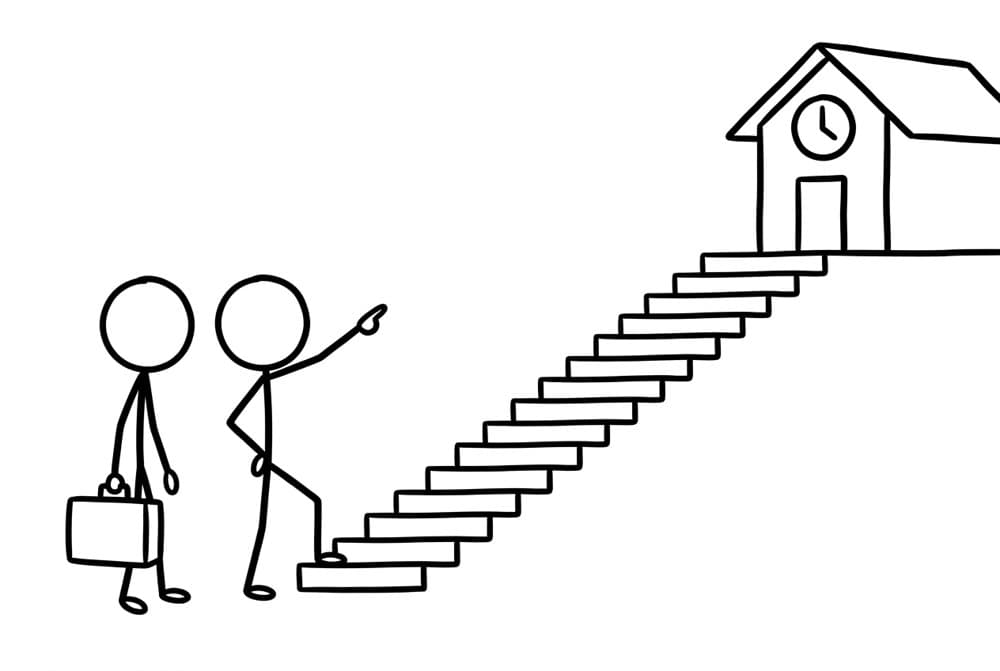
Example 3 / 3
Player A asks player B the way to the train station.
— So how do I get to the train station?
— Train station, let me think. First you turn left, then on the right there are some stairs you should climb to the top.
— Top of the stairs is the train station, right?
— Right, the stairs are always so difficult for me.
Variations
 Last LineHere a player repeats not the last word but the partner’s whole last line, and starts the answer with it. You may adjust the repeated line slightly so that it makes more sense.
 Last Letter, First LetterA player starts the answer with the last letter of the partner’s line. Unlike the main format, this one needs some spelling and language finessing.
Sources
Also called: Dernier mot - premier mot · Letztes Wort - erstes Wort