What it is
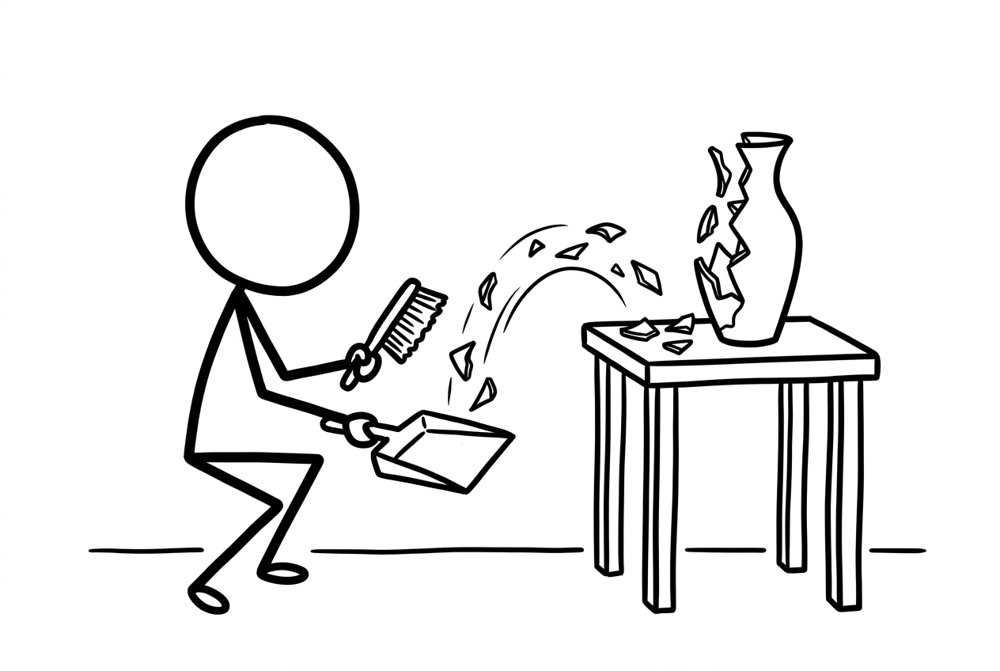
Two players play a scene, and a caller sends it back and forth with calls: in reverse, the players repeat their lines and moves in reverse order.
How to play
- The call. Usually the host is the caller and controls the scene, by clapping and saying “Reverse” or by ringing a bell. An audience member, a director or offstage players can give the calls too.
- The scene runs. Two players start a scene and play it forward for a bit. On a call it goes into reverse, and on the next call it goes forward again.
- Reverse. On “Reverse”, repeat your lines in reverse order, but keep the words inside each line in the same order. The player who spoke last goes first, with their own line. Retrace your actions backwards too: walk backwards, close the doors you opened.
- Forward. On “Forward”, play it all again, as close to the original as you can.
- Other calls. The caller can also slow the scene down, advance it frame by frame, pause it or fast forward it. In slow motion the players usually lower and slow their voices too. On fast forward they rush through the scene in : they know only the broad movements. If the fast-forwarded part is rewound and played normally, the players have to fill it in.
- How far back. You can reverse all the way to the start of the scene, but a reverse usually doesn’t go that far. After a reverse to the start, the scene is likely to end somewhat chaotically.
What it teaches
The format trains attention on stage and memory for lines: to reverse a scene, the players have to watch what happens and remember what went before. It forces them to work in the present. It also trains storytelling, playing a fun scene and getting to the point instead of bridging.
History
Keith Johnstone used the same technique: when the coach shouted “Now!”, everything went backwards. It let him return a failing scene to an earlier point and run it forward in a more profitable direction. His company, the Theatre Machine, played murder scenes in reverse so often that the technique became known as Murder in Reverse. The game’s old name was Video Cassette Recorder: the new thing about that machine was the rewind, which let you run the tape back and re-watch great scenes over and over.
Tips for players
Example
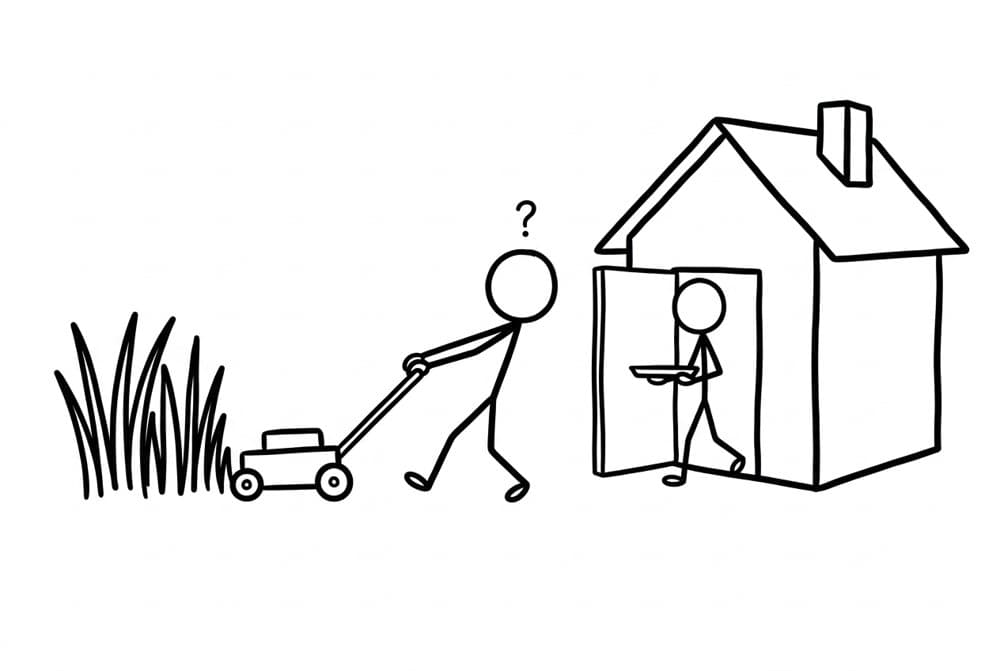
Player A pushes a lawnmower through dense grass in the yard, and B comes out of the house with a tray.
— It’s so hot, the mower can barely move!
— Here’s some lemonade, take a break.
The caller shouts: — Reverse!
They both move backwards like a film run in reverse: B carries the tray back into the house, A rolls the mower back and says the lines from the end.
The caller: — Forward! — and the players play the same moment again, only faster.
Variations
 Past the startTry reversing the scene past the point where it started.
 Backwards speechInstead of saying their lines in reverse order, the players speak backwards gibberish, which sounds like a tape played backwards.
 Remote controlThe caller borrows other features of a video remote: subtitles, picture in picture, jump to scene, a change of audio track.
 Director’s commentaryThe action goes on, while an offstage voice gives behind-the-scenes facts and gossip.
 Another languageThe caller switches the scene to another language, one that challenges the players rather than mocks part of your community.
 Camera angleThe caller calls a different camera angle, and the players quickly shift their positions on stage.