What it is
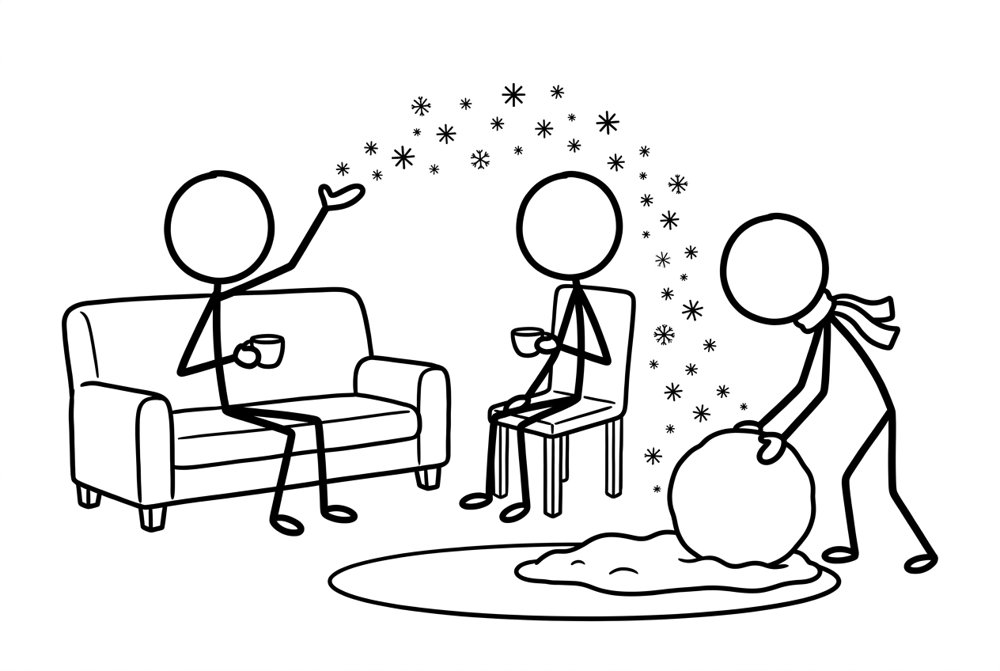
Players sit in a horseshoe on chairs or stand; sometimes a sofa goes on one side of the stage and a couple of chairs on the other. They open with a casual conversation, like guests at a dinner party. In the Living Room, conversation and scenes take turns until the end of the show.
Setup
- Props. Dress the set with living-room props: a lamp, a picture, cushions. If you like, bring beer: the show will feel different from a regular , and the players get a little sillier and more confessional. And it may get easier to play, as if you really were at home.
- Cast and length. In class five or six players play it, on stage sometimes more, but it is more fun when every player both talks and plays scenes. The show runs from fifteen minutes to an hour.
Warm-up
- Warm-ups in a circle. “Eight Things About Me” works: one player stands in the middle of the circle and says eight true things about themselves, and the team counts them off. Or “That Makes Me Think Of…”: one player offers a word, another starts a true monologue with “That makes me think of…”, and a third picks up a word from it and goes on the same way.
- Warm-ups with scenes. “Anecdotes”: three players describe to camera, mockumentary-style, a shared experience the team suggests, such as the time you made your first flan. Or scenes in a circle, keeping one of the characters each time.
Opening
- The audience prompt. Start with an audience suggestion: the conversation grows from it. Questions like “What’s the weirdest house-warming present you ever received?” or “Is there an object in your house you’d like to get rid of, but you can’t?” work well. Don’t ask an audience member for their story: the players are about to do a lot of talking anyway.
- True stories. You don’t have to play yourself, but tell true stories or talk about what is happening in the world. Tell the audience beforehand that all of it is true.
End of a topic
until the end of the showfrom 15 minutes to an hour
conversations shorter, scenes longer
Scenes
- Into a scene. Any player hooked by a story from the conversation steps out into the middle of the horseshoe and starts a scene. Don’t act out the story itself; take one idea from it. One conversation can grow into a single scene or into many.
- Transitions. Don’t wait for a laugh, the end of a story or an insight: once you have an idea, step out into a scene, even if interrupting seems rude. Make your transitions high-energy, since there is a lot of sitting and talking in this show.
- Tag-out. Between scenes a regular tag-out works: you replace one or more players in the scene, and one character from the previous scene stays. To replace a player, tap them on the shoulder. This way you add a detail to what was just said and cut back to the same situation.
Back to the conversation
- From the scenes to the conversation. After a few scenes, go back to your seats and start a new conversation from what happened in them.
- End of a topic. When a topic is played out, someone still in the chairs takes the focus with a line and starts the conversation again. A new strain of the topic emerges by itself, and with it new scenes. After the first round the conversation can start from the suggestion or from earlier topics, and you can always come back to a story later.
- Pace of the show. As the show gains momentum, make the conversations rarer and shorter, and the scenes more frequent and longer.
What it teaches
Schutte writes that she plays the Living Room as a long form to know the people who play in the show, to see the human condition and to relate other people to herself.
Tips for players
Examples
Example 1 / 4
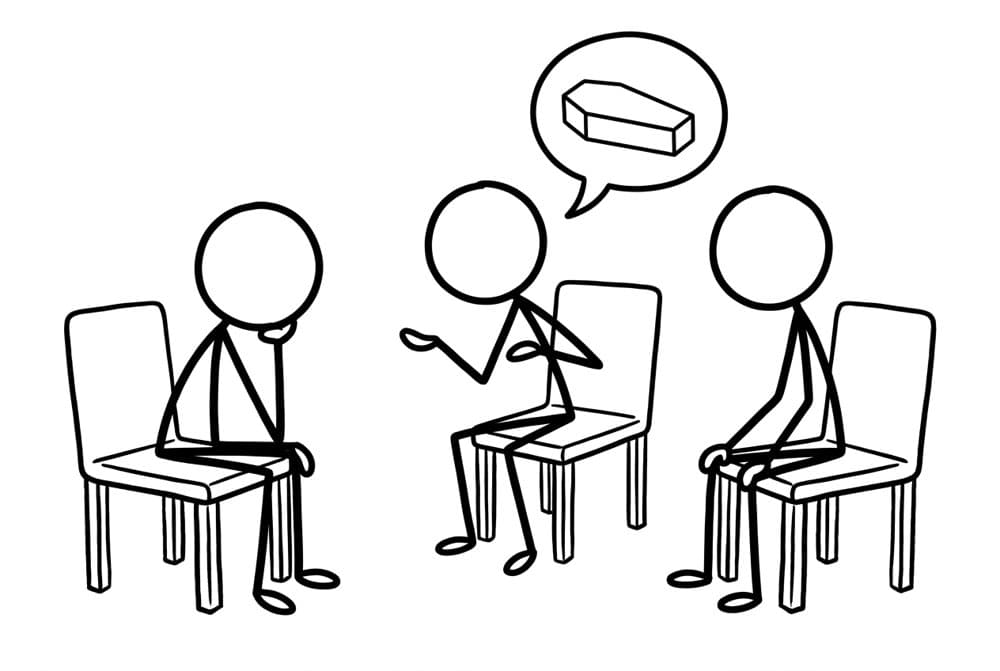
The run-up. The audience suggestion is “museum”. The players sit on chairs in a horseshoe and chat, like guests at a party.
— Once in a museum I walked into an empty room. In the middle there was a golden coffin, with no label and no caption.
— And what did you do?
— I stood there, looked around and quietly walked out. Alone in a room with a coffin, it felt creepy.
— Museum attendants drive me mad. One sits on a chair and looks at you as if you’ve already stolen something.
— My dad, though, touches everything: paintings, vases, armour. He says: “But I’m careful.”
— And I have never listened to an audio guide to the end. A man talks for forty minutes about one vase.
One of the players stands up, steps out into the middle of the horseshoe and starts the first scene.
Example 2 / 4
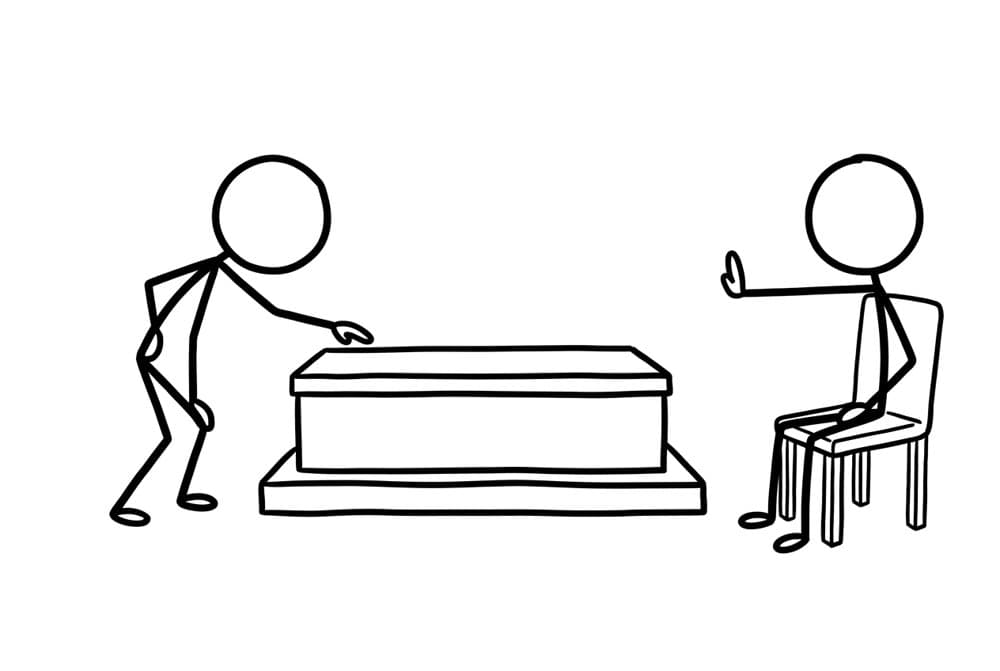
Scene one. They took the coffin with no label and turned it around: the attendant forbids anyone to touch it, yet doesn’t know what it is himself. A visitor reaches for the coffin.
— No touching!
— What is it?
— An exhibit.
— Whose?
— It came on Monday. The director said “put it here” and went on holiday.
— Have you looked inside?
— I never go closer than three metres. You’re the first. Tell me afterwards.
Example 3 / 4
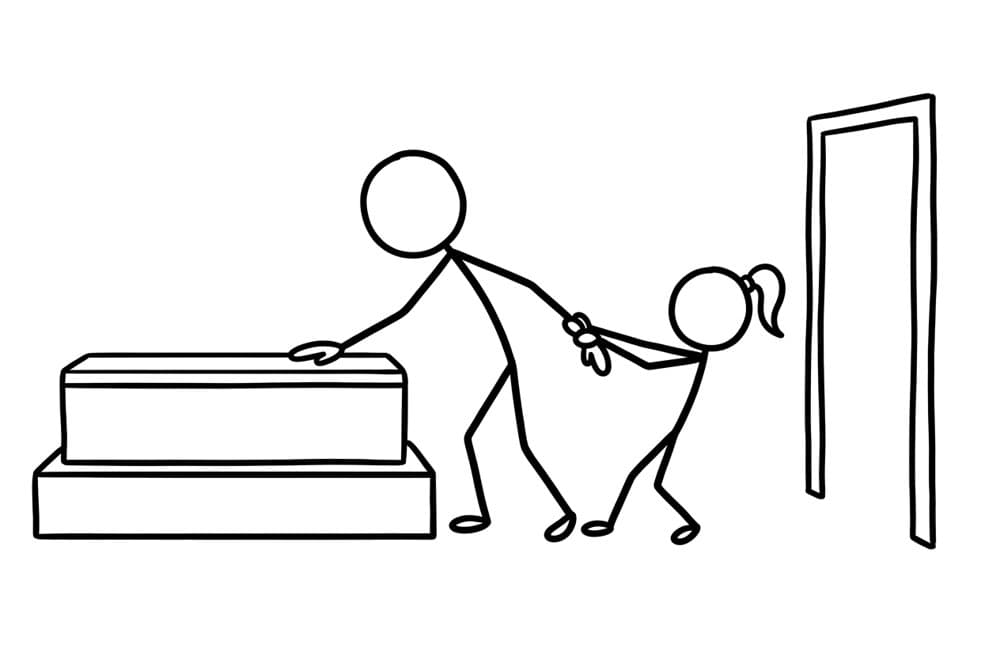
Scene two. They took the dad who touches everything and put him in the room with the coffin. Dad strokes the coffin, and his daughter pulls him toward the exit.
— Dad, don’t touch it.
— But I’m careful. Feel how cold it is.
— There isn’t even an attendant here. Strange.
— No attendant, no rule.
— No attendant means everyone left. Why?
— Because they weren’t careful. Hold my phone, I’ll look inside.
Example 4 / 4
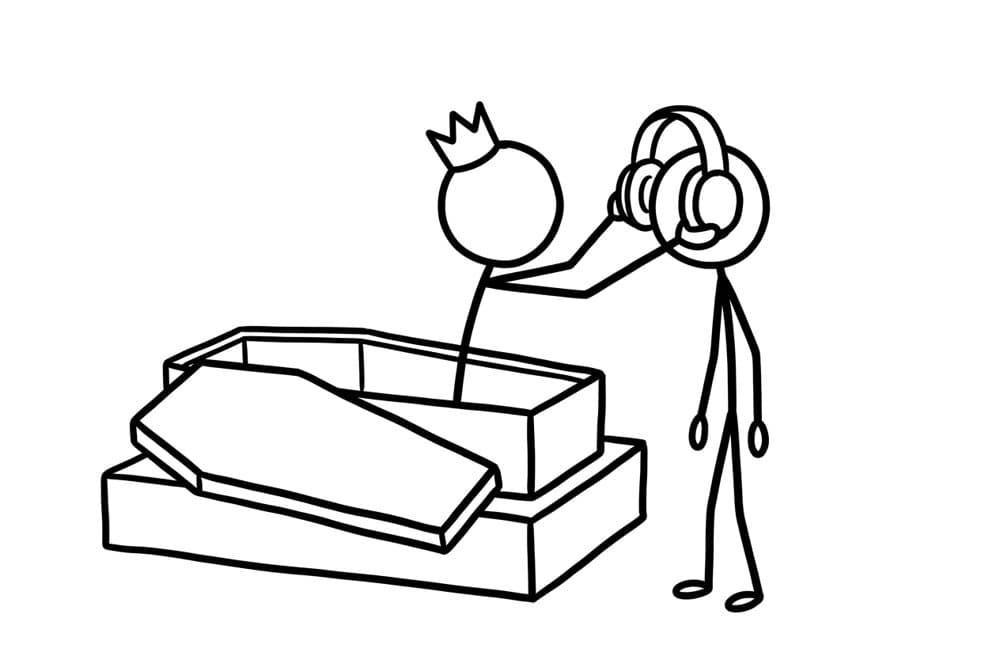
Scene three. They took the audio guide and a ghost, but turned it around: the ghost doesn’t scare anyone, it takes offence. The ghost climbs out of the coffin and takes the headphones off a visitor.
— What’s in the headphones?
— The vase. Forty minutes about the vase.
— Forty minutes about a vase, and not a word about me. I’ll have you know, I’m a tsar.
— Shall I write you a label?
— Write: “Touching allowed.” At least then someone will come over.
Variations
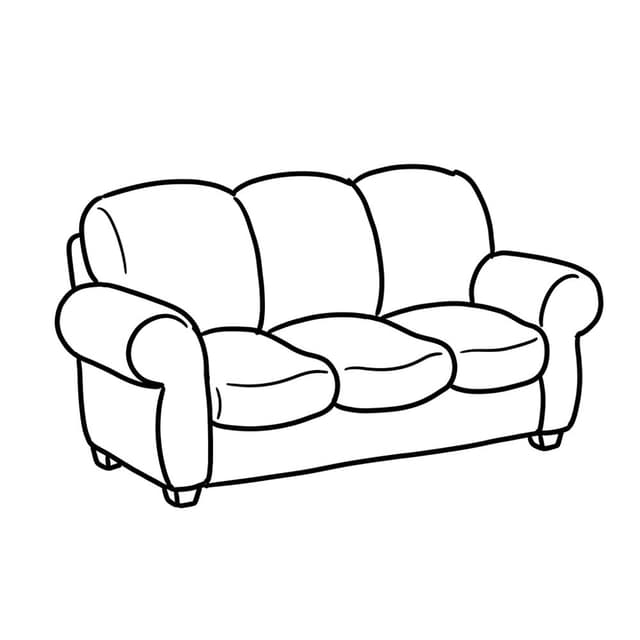 SofaPut a sofa on one side of the stage and a couple of chairs on the other. It is awkward to jump up from a comfortable sofa, and that is much funnier than chairs alone.
 ChaptersThe show is also played in two or three chapters, switching some of the players for each one.
 Two groupsIf you have many players, half of them do the conversations and the other half the scenes, and the groups can switch in the middle.
Videos
Sources
- 53factsThe Improviser's Way
- 10factsPeople and Chairs
- 8factsIRC Improv Wiki